Guide · November 9, 2026
Seller closing costs in Florida and Arizona: what you pay and why
Seller closing costs are the charges for the sale itself, taken from your price on closing day. Florida and Arizona charge for the same steps in different ways. This guide lists every line, who pays it, which amounts the law fixes, and what you can compare.

Key points
- Seller closing costs are charges for the sale itself. Your mortgage and liens are debts you already owe, and they are paid from the price in every sale.
- The contract decides who pays each closing cost. Read its closing costs paragraph before you sign.
- Florida taxes the deed at 70 cents per $100 of the price (section 201.02). Arizona charges a flat $30 recorder fee per document, with its $2 deed fee inside it (sections 11-475 and 11-1132).
- On a $300,000 house, the lines fixed by law come to $2,377 at most in Tampa and $430 at most in Phoenix, before title and escrow quotes.
- Florida sets the title premium by state rule. Arizona title insurers each file their own fees, so Arizona premiums can differ between companies.
- In a sale to BIMINIO we pay the closing costs. A cash offer is below full market value, so compare what you keep.
What seller closing costs are
Seller closing costs are the charges for selling the house itself. They pay for the transfer of the deed, the title search and policy, the work of the title or escrow company, the recording of papers in the county records, and papers from a homeowners association. In Florida they also include a state tax on the deed.
They are separate from the debts you already owe on the house. Your mortgage, a home equity line, liens, court judgments and unpaid property tax all stay with the house until they are paid. The title company pays them from the price at closing, in every kind of sale.
Both groups appear on the closing statement you read before you sign. The price sits at the top, the costs and the payoffs come out of it, and the last line shows the amount due to you.
Seller closing costs in Florida and Arizona, side by side
The two states charge for the same steps in different ways. Florida puts a tax on the deed that grows with the price. Arizona charges a flat fee to record it. Title insurance is priced by one state rule in Florida and by each insurer's own filed schedule in Arizona.
| Line | Florida | Arizona |
|---|---|---|
| Tax or fee on the deed | 70 cents per $100 of the price; Miami-Dade 60 cents, plus a 45 cent surtax on other than a single-family home (section 201.02) | A $2 fee included in the $30 recorder fee (sections 11-1132 and 11-475) |
| Recording | $10 for the first page, $8.50 for each added page (section 28.24) | $30 per document (section 11-475) |
| Title insurance premium | Set by state rule (section 627.782) | Each insurer's filed schedule (section 20-376) |
| Settlement or escrow fee | The title company's quote | The escrow company's quote |
| HOA papers | Estoppel certificate, at most $250, plus $100 for a rush (section 720.30851) | Resale disclosure, at most $400, plus $100 for a rush (section 33-1806) |
| Property tax for this year | Split by days owned; due November 1 (section 197.333) | Split by days owned; two halves, due October 1 and March 1 (section 42-18052) |
How the costs move through a sale, step by step
Closing costs are worked out over the weeks between the signed contract and closing day. These are the steps, in order, and what each one means for your costs.
- You sign the purchase contract. Its closing costs paragraph decides who pays each cost.
- The title or escrow company opens the file and receives the earnest deposit.
- The title company searches the records and sends a title commitment, which lists what must be cleared before closing.
- The title company asks your lender and each lien holder for a payoff figure, and asks the HOA for its papers.
- You receive an estimate of the closing statement. Check every line against the contract.
- You receive the final closing statement. Read it line by line before you sign.
- At closing the title company pays each lender, lien holder and cost, records the deed, and sends you the rest.
- In the weeks after, your old servicer refunds any escrow balance, and each lender records the release of its loan.
Read the guide: what happens at closing →
The contract decides who pays
Each closing cost goes to whichever side the contract names. That is why two sales of similar houses can leave their sellers with different costs.
The state can still collect the Florida deed tax from either side. The Florida Department of Revenue says all parties to a deed are liable for the documentary stamp tax, whichever party agreed to pay it. So the contract decides who pays at closing, and the tax must still be paid by someone.
Before you sign, find the paragraph on closing costs and check that it names who pays the deed tax in Florida, the owner's title policy, the settlement or escrow fee, and the HOA papers. If a cost is not named, ask the title company how it will be split, and get the answer in writing.
Costs fixed by law, and costs you can compare
Some amounts are the same whichever company runs your closing, because the law fixes them. Others are a company's own price, and you can compare them.
| Fixed by law | A company's own price |
|---|---|
| Florida deed tax (section 201.02) | Settlement fee (Florida) |
| Florida recording fees (section 28.24) | Escrow fee (Arizona) |
| Arizona recorder fee (section 11-475) | Arizona title premium, from each insurer's filed schedule |
| Florida title premium, set by state rule (section 627.782) | Courier, wire and search fees |
| HOA fee caps in both states (sections 720.30851 and 33-1806) | A lawyer's fee, if you hire one |
Debts paid from the price
Each payoff needs a written figure from the lender or lien holder. Federal rules give a mortgage servicer 7 business days to send a payoff statement after a written request (12 CFR 1026.36(c)(3)), and Florida gives a lender 10 days (section 701.04). Send the request early, so the closing date does not move.
If the payoffs add up to more than the price, the sale cannot close unless the lenders agree in writing to take less or you bring the difference.
Read the guide: your mortgage payoff and liens →
Taxes: on closing day and afterwards
Two taxes show on the closing statement: the Florida tax on the deed, and the split of this year's property tax in both states. Income tax on the profit comes later, on your tax return. Under IRS Publication 523 you may leave out up to $250,000 of gain on your main home, or $500,000 for a married couple filing jointly, if you owned and lived in it for at least 24 months of the 5 years before the sale.
Read the guide: taxes on a house sale →
Common mistakes with seller closing costs
Each mistake below adds a cost or a delay, and each has a fix.
- Comparing offers by price alone. Compare what you keep after every cost and payoff.
- Signing a contract that does not say who pays the deed tax, the title policy and the escrow fee.
- Asking the HOA for its papers late, and then paying the $100 rush fee.
- Waiting for the title company to find your loans. Give it every loan number on the first day.
- Assuming a loan you paid years ago was released. Check the county records for a recorded release.
- Trusting new wire instructions sent by email. Confirm by phone, with a number you already know.
- Forgetting the escrow refund and the release after closing. Watch for both.
The same $300,000 house in Tampa and in Phoenix
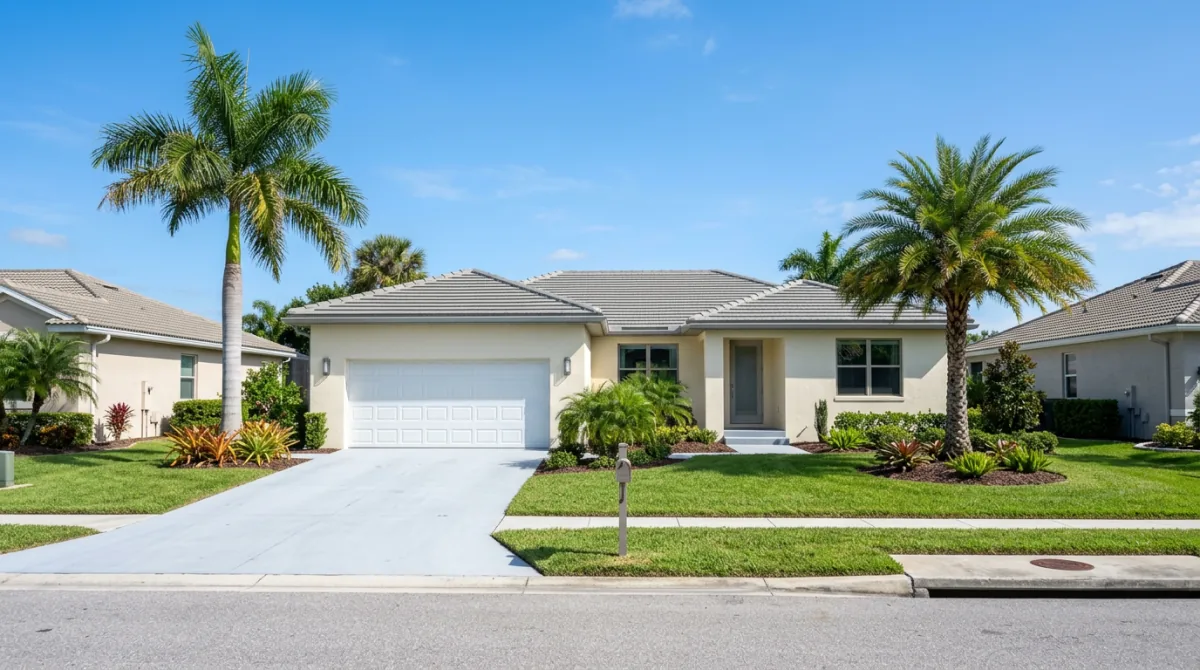
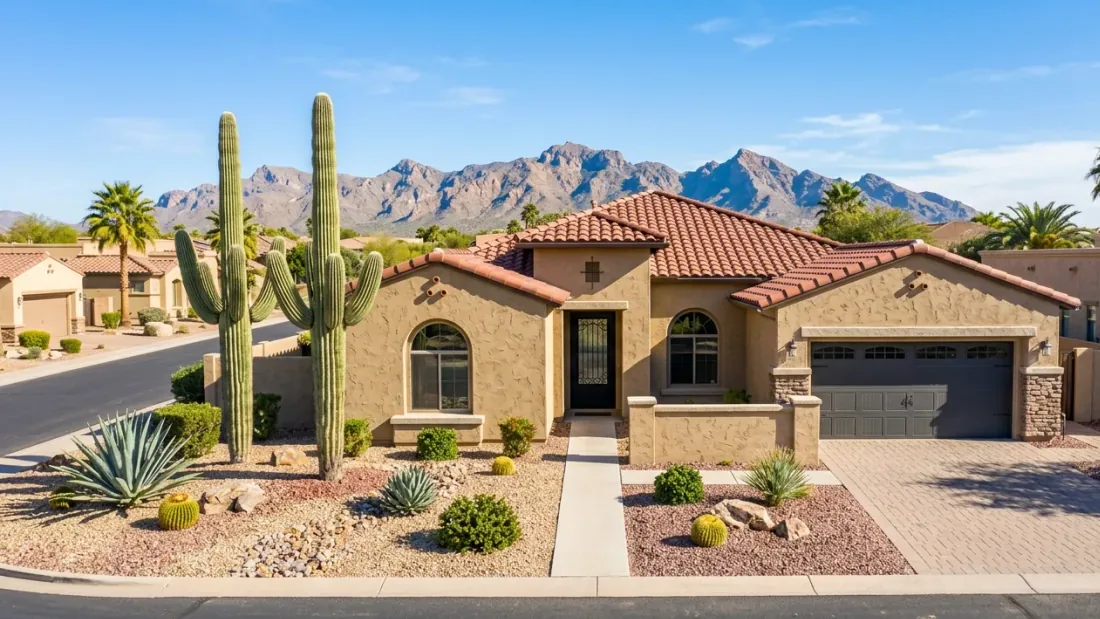
Take two $300,000 houses, each in an HOA with no dues owed and the papers ordered on time, with a three-page deed. Count only the lines whose amounts the law fixes.
In Tampa, the deed tax is $2,100, recording is $27, and the HOA estoppel certificate is at most $250, so $2,377 at most. In Phoenix, the recorder fee for the deed is $30 and the HOA resale papers are at most $400, so $430 at most. The gap of $1,947 comes from the Florida deed tax of $2,100.
Title insurance and the settlement or escrow fee come on top in both cities, from the title company's figures. Your payoffs come out of the price in both.
| Line fixed by law | Tampa, Florida | Phoenix, Arizona |
|---|---|---|
| Tax or fee on the deed | $2,100 | Inside the recorder fee |
| Recording the deed | $27 (three pages) | $30 |
| HOA papers, no rush | $250 at most | $400 at most |
| Total of these lines | $2,377 at most | $430 at most |
Run your own numbers in the net proceeds calculator →
Closing costs in a sale to BIMINIO
BIMINIO buys houses for cash in Florida and Arizona. In a sale to BIMINIO we pay the closing costs, and the closing statement shows them as paid by BIMINIO. Your mortgage, liens and any back taxes are paid from the price, as in any sale. A licensed title company handles the paperwork and holds your earnest deposit, and you pick the closing date, from 7 to 35 days after you accept.
A cash offer is below full market value. We say that out loud. Before you choose, compare what you keep after every cost, every payoff and the months of bills while a listing waits for a buyer.
Read the guide: cash offer vs listing, the costs →
Want a number for your house? BIMINIO buys in Florida and Arizona, as is, and pays the closing costs. A written offer comes within 24 hours.