Selling as is · November 16, 2026 · 8 min read
Selling a fire-damaged house in Florida: the insurance claim, your lender and your options
Published by BIMINIO Properties, a company that buys houses for cash in Florida and Arizona.
Scheduled for November 16, 2026.
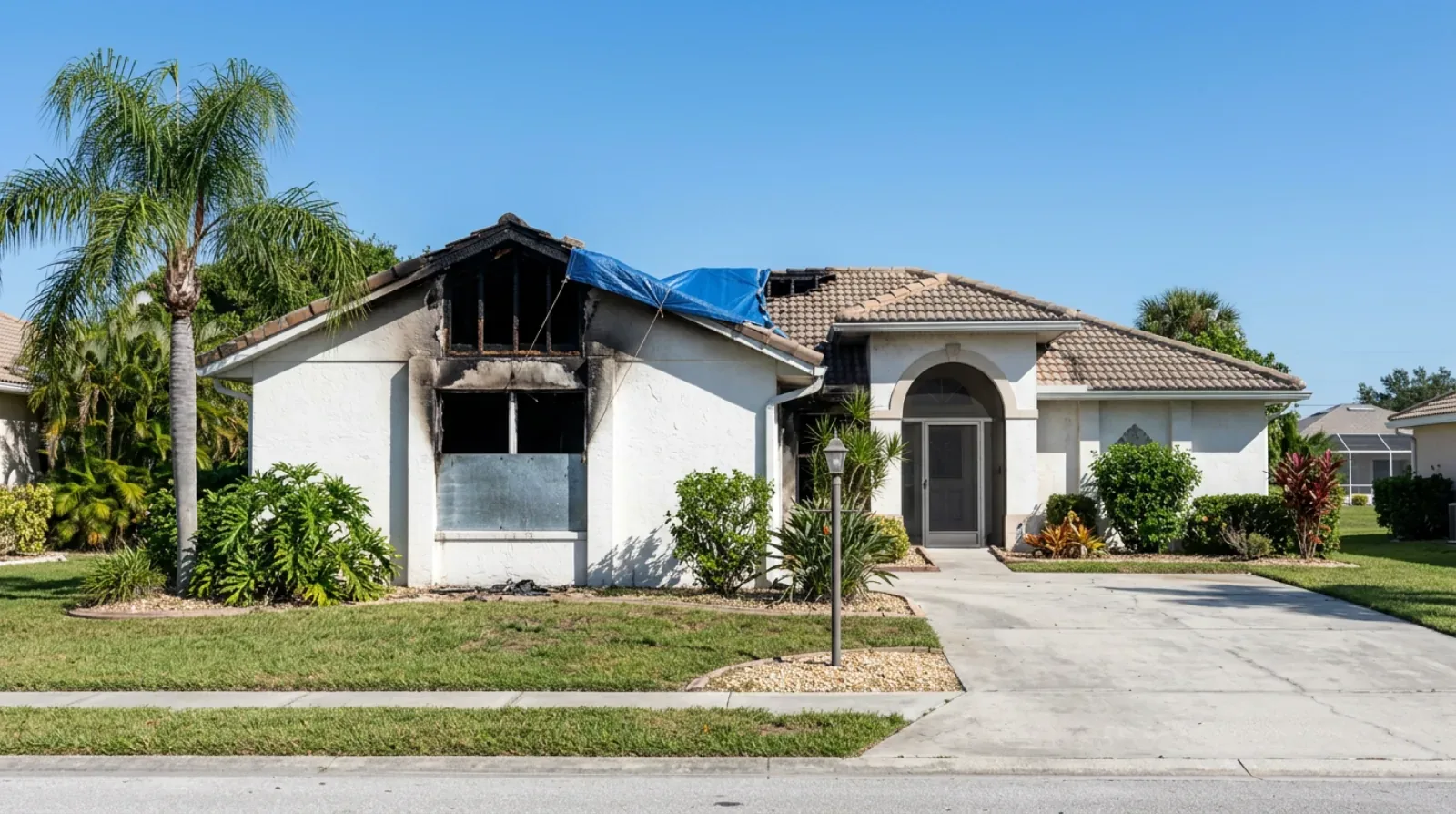
A fire gives you three jobs at once: the insurance claim, the lender, and the house itself. Settle what the insurer owes first, because that number decides whether you repair, rebuild or sell the house as it stands.
This post covers Florida law as it reads on 2026-11-09. It is general information. For your own claim, ask a Florida lawyer.
What your insurer owes after a fire
Florida has a "valued policy law", section 627.702 of the Florida Statutes. It sets the amount an insurer owes for a fire, and it works in two ways.
| Loss | What section 627.702 says |
|---|---|
| Total loss of the building from a covered peril | The insurer owes the amount the property was insured for in the policy, if a premium was charged and paid (subsection 1) |
| Partial loss by fire or lightning | The insurer owes the actual amount of the loss, up to the amount of insurance for that property and that peril (subsection 2) |
The same section adds limits:
- The total loss rule needs "the absence of any change increasing the risk without the insurer's consent" and no "fraudulent or criminal fault" by the owner.
- The insurer is "never liable for more than the amount necessary to repair, rebuild, or replace the structure" after other benefits already paid for the loss.
- The rules do not apply when several insurers cover one building and the owner did not tell them all, when buildings share one blanket amount, or when a builder's risk policy covers the building. A coinsurance clause in the policy also applies.
Find the page of your policy that lists the insured amount and the type of cover. It tells you which line of the table fits your loss.
How fast the insurer must act
Section 627.70131 gives the insurer a schedule once you report the fire:
- 7 calendar days to review and acknowledge your communication.
- 7 days after it receives proof-of-loss statements to begin its investigation.
- 30 days after it receives those statements to carry out any physical inspection.
- 60 days after it receives notice of the claim to pay or deny it.
Write down the date of every call, email and letter. If the insurer misses a date, you have a record. The deadlines for you to report a claim are in our post on storm damage claim deadlines. They are the same for a fire: 1 year for a new claim and 18 months for a supplemental one.
Your lender and the claim check
If you have a mortgage, the claim check may carry two names. The Office of the Comptroller of the Currency, a federal bank regulator, says on its consumer page that the check "may be payable to both the policy holder (you) and the lien holder (the bank)." The same page says banks have different rules for releasing insurance funds, and tells owners to review their mortgage loan documents and contact the bank.
So before the check arrives, ask your loan servicer in writing:
- How it releases claim money, all at once or in stages.
- What papers it needs from you or from a contractor.
- Who to call when a payment is late.
If you plan to sell, also ask what the servicer needs before it releases claim money, because the loan is paid from the sale at closing.
Help with the claim: a public adjuster and mediation
Florida law gives you two kinds of help.
A public adjuster is a licensed person you hire to handle the claim for you. Section 626.854 caps the fee. It is 20 percent of the claim payments for a claim that is not tied to a state of emergency, and 10 percent when the claim comes from an event under a Governor's state of emergency declaration. On any payment the insurer made, or agreed in writing to make, before the contract was signed, the fee is 0 percent. The contract must tell you that you can cancel within 10 days.
Mediation is a meeting with a mediator to settle a disagreement with the insurer. Under section 627.7015 the policyholder can request it, and the insurer pays the cost of conducting the conference, with exceptions in the section. Your insurer must tell you about this right when you file a covered claim.
What to tell a buyer
A buyer wants to know about a fire, and in Florida the seller has a legal duty to say so. In Johnson v. Davis (1985), the Florida Supreme Court held that "where the seller of a home knows of facts materially affecting the value of the property which are not readily observable and are not known to the buyer, the seller is under a duty to disclose them to the buyer."
A repaired house can look new. The fire, the smoke damage and the repair work are then facts the buyer cannot see, so tell the buyer. Tell the buyer about an open or paid insurance claim too. Our guide on selling as is and what to tell the buyer lists what to share and how.
Florida also requires a seller of residential property to give the buyer a flood disclosure under section 689.302, at or before the time the contract is signed. A fire does not remove the flood disclosure.
Fire damage in your Florida house? Get a written offer in 24 hours. A written cash offer comes within 24 hours, with the comparable sales we used. There is no cost and no obligation.
When the damage reaches half the house's value
If your house is in a FEMA flood zone, a second rule can decide your plan. FEMA says "substantial damage" means repairs that cost 50 percent or more of the structure's market value before the disaster, "regardless of the cause of damage." A building in that position "must be brought into compliance with local floodplain-management regulations", and owners who rebuild may need to elevate the house.
Hillsborough County, which includes Tampa, explains how it works there. The rule applies to properties in Special Flood Hazard Areas (flood zones A, AE, V, VE, AO, AH, AR or A99). Costs include permits pulled in the prior 12 months. The county says it is the owner's responsibility to work out whether the repairs reach the threshold, and when they do, "the entire structure must comply with current floodplain requirements." Other counties publish their own pages, and the percentage can differ between local governments, so ask the building office before you sign a repair contract.
A buyer who plans repairs inside a flood zone faces the same rule.
Repair first, or sell as is?
Repair first and you may sell at a higher price, but you keep paying the mortgage, taxes and insurance while the work is done, and you wait for the insurer's payments. Sell as is and you stop those costs sooner. The buyer takes the repairs, so the price is lower than for a repaired house.
Before you choose, work out:
- How much has the insurer paid, and how much is still to come?
- How many months would the repairs take, and what does each month of ownership cost you?
- Is the house in a flood zone where the 50 percent rule could apply?
To compare both paths with your own figures, use the net proceeds calculator. If the claim is still open when you sell, read how a buyer can take over a claim in our storm damage post.
What we ask about a fire-damaged house
When you call BIMINIO about a house after a fire, we ask:
- When the fire happened, and what the fire department or insurer has told you.
- Whether you reported the claim, and where it stands.
- Whether anyone lives in the house, and whether the utilities are on.
- Whether a lender holds a mortgage.
We buy damaged houses as they are in Tampa, Miami, Orlando and Lakeland. No repairs and no clean-up. The repair budget behind the offer comes from a real scope of the work, and we say clearly that a cash offer is below full market value. You get a written offer within 24 hours and choose a closing date from 7 to 35 days out. See our page on vacant or damaged property, or call us at (813) 729-8998.
Thinking about selling? BIMINIO buys houses in Florida and Arizona as is. A written offer comes within 24 hours, and you pick the closing date.
Sources
- Florida Statutes (2026), section 627.702: valued policy law, read November 9, 2026
- Florida Statutes (2026), section 627.70132: notice of property insurance claim, read November 9, 2026
- Florida Statutes (2026), section 627.70131: insurer's duty to acknowledge and investigate claims, read November 9, 2026
- Florida Statutes (2026), section 626.854: public adjusters, read November 9, 2026
- Florida Statutes (2026), section 627.7015: alternative procedure for resolution of disputed property insurance claims, read November 9, 2026
- Florida Statutes (2026), section 689.302: disclosure of flood risks to prospective purchaser, read November 9, 2026
- Johnson v. Davis, 480 So. 2d 625 (Fla. 1985), Supreme Court of Florida, decided October 31, 1985 (copy of the opinion), read November 9, 2026
- Office of the Comptroller of the Currency, HelpWithMyBank.gov: property and home insurance, read November 9, 2026
- FEMA: What does substantial damage mean?, read November 9, 2026
- Hillsborough County: Rebuilding and repair, the 50 percent rule (page last modified 2025-08-07), read November 9, 2026
Situations this helps with
Guides
- Selling as is: what to tell the buyer
- How a cash offer is worked out
- Selling during hurricane season in Florida
- Selling a vacant house
- Selling a storm-damaged house with an open claim
- Selling a fire or water damaged house
- Selling a building lot or vacant land
This post is general information. BIMINIO does not give legal, tax or financial advice.